nutritionwlashaundreab


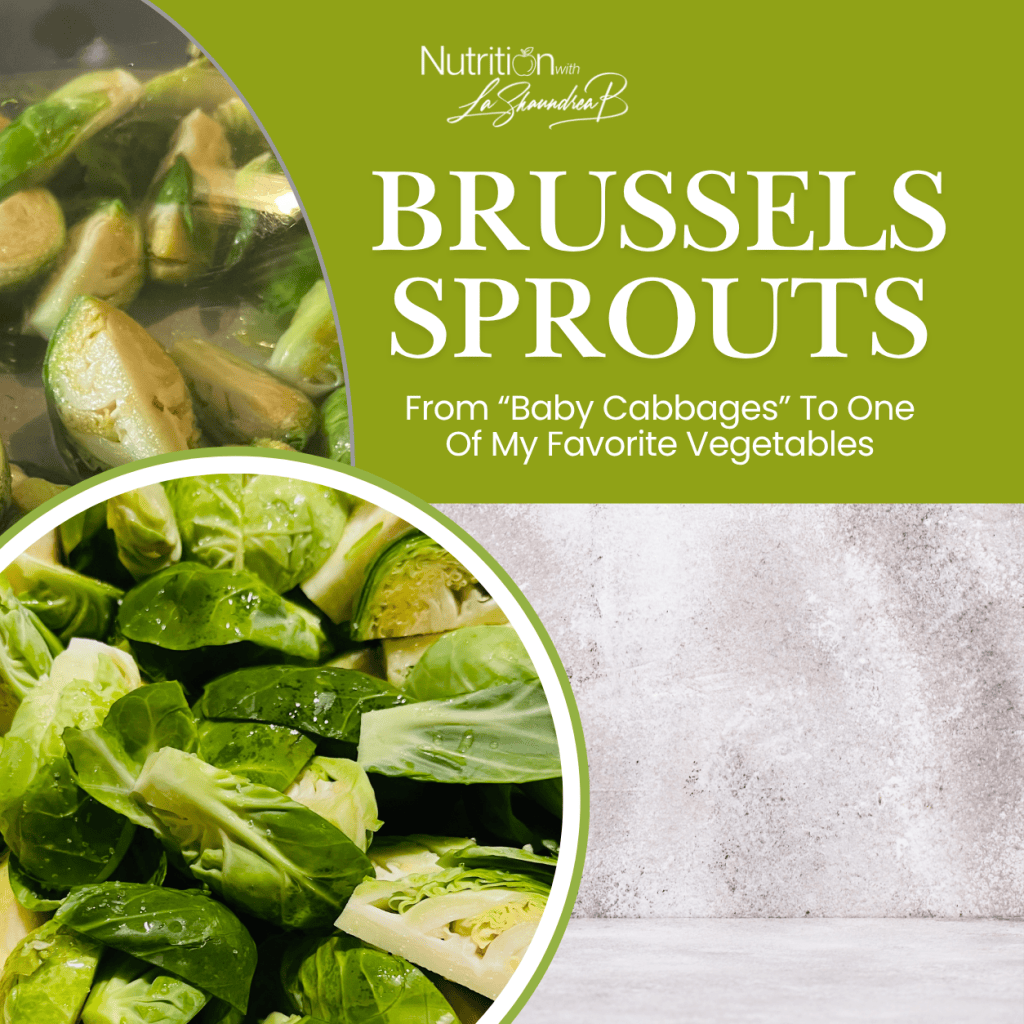
  • Today’s post is about one of my all-time favorite veggies, Brussels sprouts. As a child, I hated Brussels sprouts! Even though I thought they were baby cabbages—and I loved cabbage—I was disappointed because they didn’t taste anything like cabbage. Their flavor was too bold and bitter for my liking, and they smelled horrible. Well, fast forward to many moons later, Brussels sprouts are on my menu, if not weekly, then almost every other week. I’m not sure when my taste buds changed. Maybe during culinary school. But now I love them!

    Last week, I purchased a bag of fresh Brussels sprouts and prepared them over the weekend. The way that I prepped them is how I typically do; however, I usually roast them in the air fryer instead of braising. Here’s how I cooked them this time:

    First, I quartered the Brussels sprouts and tossed them with a little olive oil (enough to lightly coat them—about 2 teaspoons per 10 quartered sprouts). Then, I added garlic powder, onion powder, and a little salt and pepper before tossing them into the skillet (frying pan) to start the braising process. Quick note: I rarely measure my seasonings, so I cannot tell you exactly how much I added, but it was about 3 generous shakes of each powder and 1-2 shakes of salt and pepper (all can be adjusted during or after cooking). 

    Okay…now that we’ve gotten that out of the way, let’s carry on.

    After adding the Brussels to the skillet, I let them cook over medium heat, periodically tossing them and adding small amounts of water (a tablespoon at a time) to keep them from scorching. I did this for about 5 minutes. Then I lowered the heat and covered the skillet with a lid to let them cook for an additional 8-10 minutes (feel free to cook them to your level of doneness). During the last minute or so, I added some crushed red peppers, gave them a final toss, then served them. And y’all, they were delicious! 

    Before I end, here are a few fun facts about Brussels sprouts. 

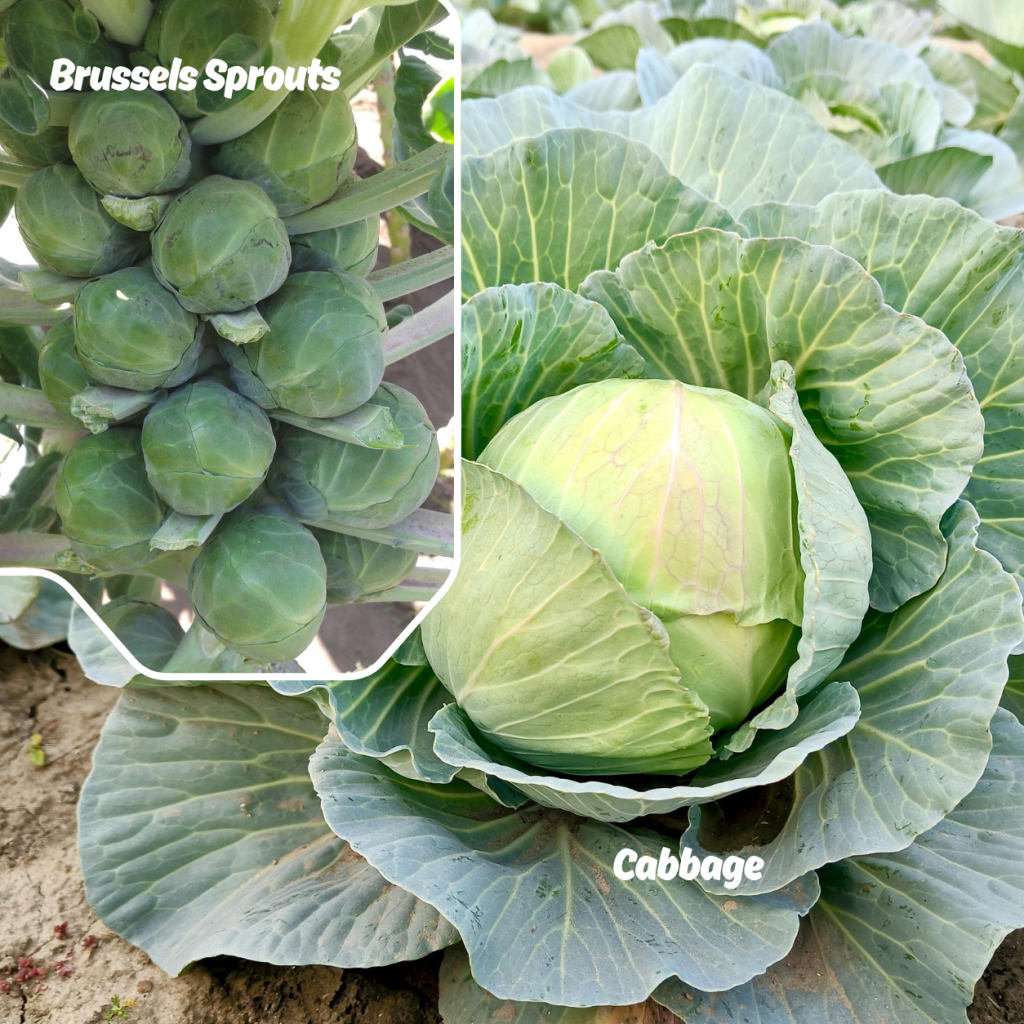
    ~ Brussels sprouts are not baby cabbages. They may look like tiny cabbages, but Brussels sprouts are small buds of greens that grow along stalks of a plant, while cabbage grows as a single head surrounded by large, leafy greens. With that said, they are in the same plant species, Brassica oleracea (USDA Plants Database).

    ~ Brussels sprouts are low in calories (~56 calories per cup, cooked, plain), and a source of vitamins A and C, folate, calcium, and fiber (USDA FoodData Central).
    Questions for you (feel free to drop the answers in the comments):

    Do you like Brussels sprouts? If so, how do you like yours prepared?

    Is there a vegetable you disliked as a child but love today?


    If you’re enjoying the content and conversations, sign up for the Let’s Get Healthier Together (LGHT) newsletter via Nutrition with LaShaundreaB. The newsletter is emailed every week and includes additional nutrition information, practical tips, recipes, challenges, and realistic strategies you can use in everyday life.

    Until next time…

    Eat Well. Feel Well. Live Well.
    ~LaShaundreaB🍏
  • We’ve spent the last few weeks talking about water, sugar-sweetened beverages, and artificial sweeteners. So, I thought we’d wrap up the conversation on a lighter note!

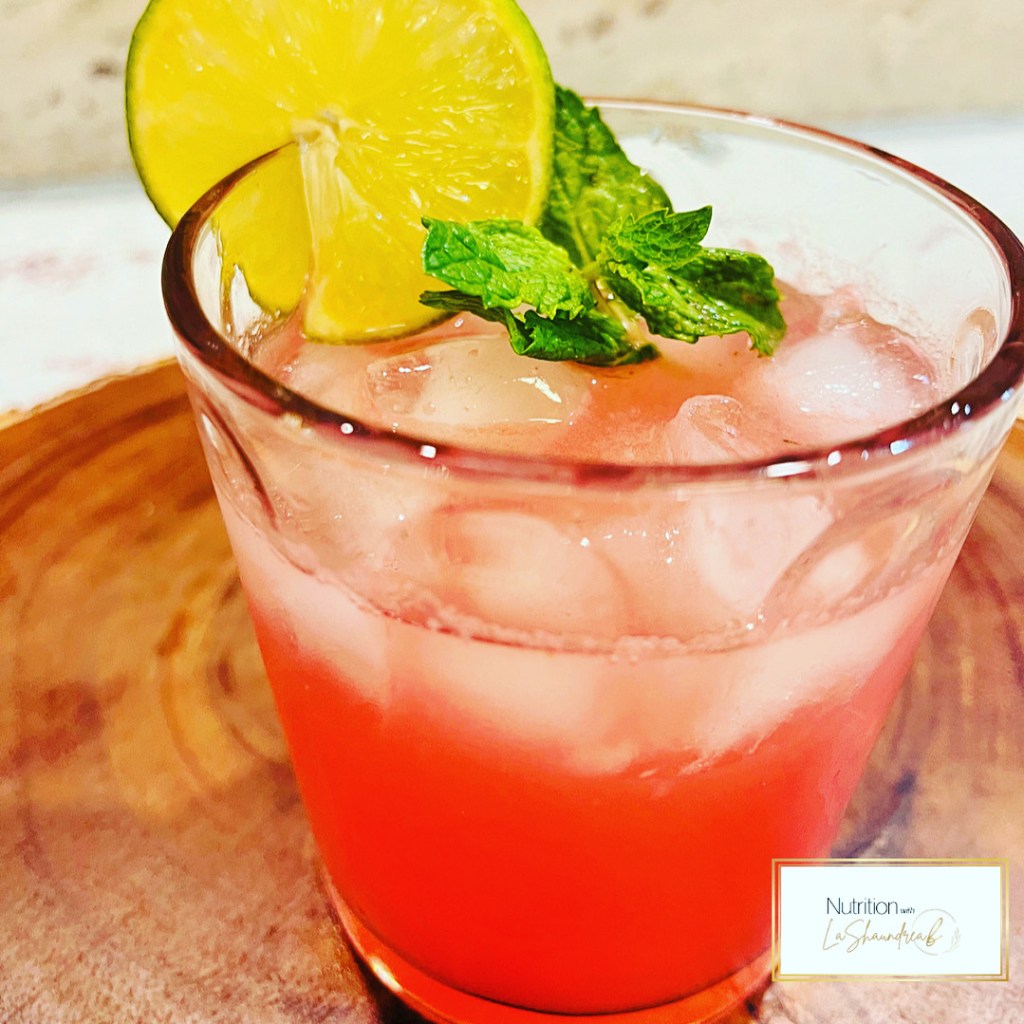
    A few years ago, I made a Watermelon Mojito Mocktail for National Watermelon Day. I saw it on the Mississippi Academy of Nutrition and Dietetics’ Facebook page and just had to try it! Y’all, I was so excited about the new recipe find that I made a couple of videos about it. Below is the video I shared on Instagram after making the drink. As I expressed in the video, the mojito was “pretty tasty!” 


    Here’s the recipe. If you decide to try it, let us know your thoughts!

    🍉 Watermelon Mojito Mocktail (Makes 2–3 servings)

    Ingredients

    • ¾–1 pound seedless watermelon cubes
    • Juice of 1 lime (about 2 ounces or ¼ cup)
    • 1 teaspoon honey or agave nectar, optional and to taste
    • 15–20 mint leaves
    • Plain or lime-flavored sparkling water
    • Ice

    Directions

    1. Blend the watermelon until it reaches a juice-like consistency.
    2. If there’s a lot of pulp, pour it through a mesh strainer. This step is optional.
    3. Pour the watermelon juice into a tall glass.
    4. Add the lime juice and sweetener, if desired.
    5. Divide the mint among 2–3 glasses and gently muddle the leaves.
    6. Fill each glass about ¾ full with ice and add the watermelon-lime mixture.
    7. Top each drink with about 1½ ounces of sparkling water.
    8. Garnish, sip and enjoy!

    Recipe adapted from The Real Food Dietitians; previously shared by the Mississippi Academy of Nutrition and Dietetics.

    This is all for today. If you’re enjoying the content and conversations, sign up for the Let’s Get Healthier Together (LGHT) newsletter via Nutrition with LaShaundreaB. The newsletter is emailed every Wednesday and includes additional nutrition information, practical tips, recipes, challenges, and realistic strategies you can use in everyday life.

    Eat Well. Feel Well. Live Well.
    ~LaShaundreaB🍏
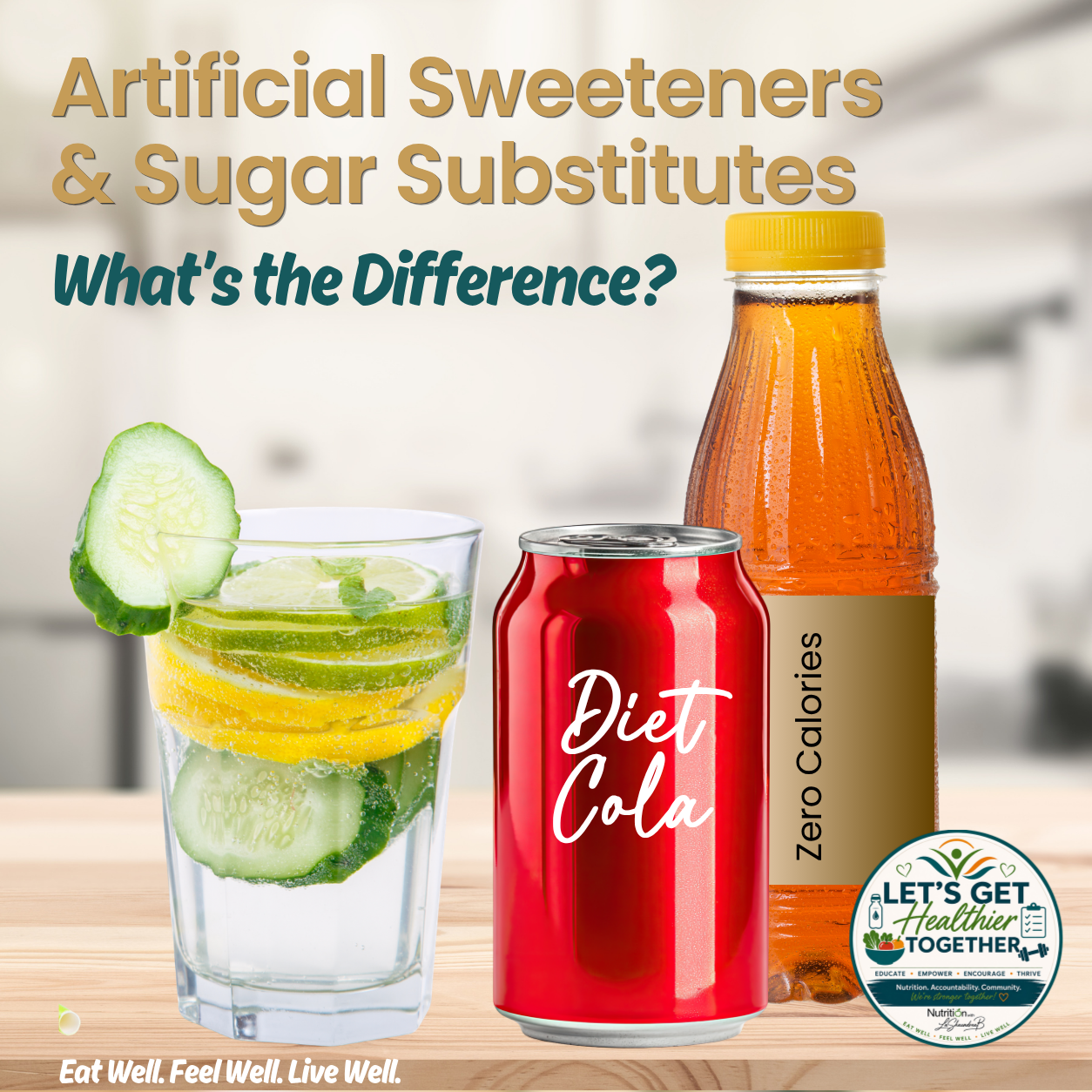
  • Have you ever picked up a beverage labeled “Zero Sugar,” “Diet,” or “No Sugar Added” and wondered what makes it taste sweet? If you haven’t, someone has, because I get this question quite often. Many people have questions about where the sweetness comes from, and whether sweeteners are plant-based or lab-made. 

    Well, here’s what we know-

    • Beverages containing artificial sweeteners and sugar substitutes have less added sugar and are typically lower in calories. This is good if you’re trying to manage your diabetes or gradually cut back on sugar-sweetened beverages. That said, not all artificial sweeteners and sugar substitutes are the same, and understanding the difference can help you make informed choices.
    • “No Sugar Added” means no sugar was added during processing. It doesn’t mean the product is sugar-free. For example, 100% fruit juice may carry this label but still contains naturally occurring sugars. “Added sugar” means sugar has been added to the beverage (or product). Always read the Nutrition Facts label and ingredient list. 

    Common artificial sweeteners and sugar substitutes you’ll find today:

    • Stevia: Derived from the stevia plant. Zero calories. Found in flavored water and teas. May have a slight aftertaste for some people. 

    • Sucralose (Splenda®): A modified form of table sugar. Zero calories. Found in zero-sugar sports and protein drinks.

    • Aspartame (Equal®, NutraSweet®): Lab-made from amino acids. Almost zero calories. Found in diet sodas and drink mixes. Safe for most, but people with PKU are advised to avoid it. (U.S. Food & Drug Administration. How Sweet It Is: All About Sweeteners.)

    • Monk Fruit Extract: Made from monk fruit. Zero calories. Found in naturally sweetened beverages and sparkling waters. Often blended with other sweeteners.

    Here’s my take on drinking beverages with artificial sweeteners or sugar substitutes. If replacing one regular soda with a diet soda helps you reduce added sugar as you transition to healthier habits, give it a try. However, the best alternative I would recommend is good, clean, refreshing water! Make water your beverage of choice. If you don’t like it plain, try sparkling or fruit-infused water.

    Remember, healthy habits are built one choice at a time—not all at once.

    Want more tips, plus weekly challenges and recipes? Subscribe to our newsletter at Nutrition with LaShaundreaB

    Ladies, if you’d like a safe space to discuss nutrition or other health topics, join our Facebook group: Let’s Get Healthier Together. No perfection required. Come as you are.

    Eat well. Feel well. Live well. ~LaShaundreaB🍏

  • Y’all, I have a confession to make. I’m struggling with my water intake! 

    Yes, me!

    Last week, I shared in our Facebook group—Let’s Get Healthier Together—that I was struggling with drinking water. I love water and prefer it to other beverages, but sadly, I’m only getting in about two 20-oz bottles a day. As a registered dietitian, I know better! I encourage people all the time about how important water is, and here I am barely getting half of what I need each day.

    For the group’s weekly challenge, I set a goal to increase my water intake to 3 bottles a day. It’s all about starting small. Well, to be honest, I started off strong. The first two days went well, but by the third day I had barely drunk two bottles. So, here I am in week two with the same goal as last week—3 bottles a day. So far, so good! 

    On another note, many struggle with drinking sugar-sweetened beverages. This week, we’ll focus on ways to increase our water intake and tips on reducing our sugar-sweetened beverage consumption. The goal is to create a foundation for making long-lasting, healthier choices.

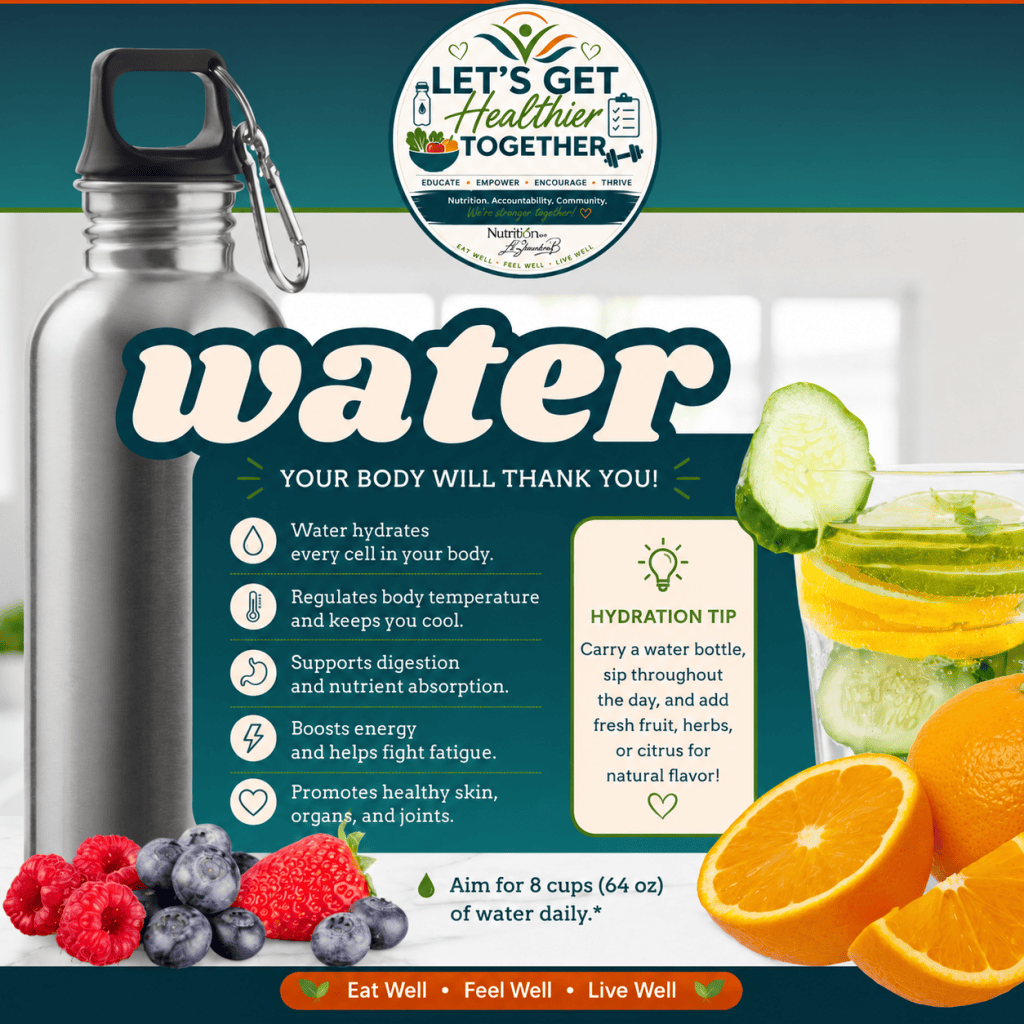
    Here are a few benefits of water and great reasons to consume it. Water—

    • Keeps us hydrated so our body works at its best 
    • Boosts energy—helps us feel alert instead of dragging 
    • Aids digestion and helps prevent constipation 
    • Supports a healthy weight (water has zero calories!) 
    • Helps our skin stay healthy and glowing

    Most healthy adults need 8-10 cups (64-80 oz) of fluids a day—and that can shift based on your age, activity level, weather, and health conditions—with most of that coming from water. While fruits, vegetables, soups, and other fluids and beverages count toward our fluid intake, water is the best option.

    Now, let’s talk about sugar-sweetened beverages and why we should limit them. For one, over the long run, they can be costly to our health. A regular 12 oz soda has about 10 teaspoons of sugar and 150 calories, with no nutrients to show for it. A 20 oz fruit drink—different from 100% fruit juice (which also contains natural sugar)—contains about 13 teaspoons of sugar or more. The more we drink, the more the calories add up, and most of the time they provide no nutritional value. There are some exceptions where vitamins and/or nutrients are added (vitamin C, protein, etc.), and those should outweigh the beverage’s sugar content. 

    So, here are a few tips to increase water intake:

    • Carry a reusable water bottle that you can refill as needed
    • Drink a glass with every meal and snack 
    • Flavor it with fruit, herbs, citrus, or flavor enhancers (limit these) if plain water bores you 
    • Set a reminder on your phone 
    • Drink a glass of water first before reaching for a soda


    Want more tips like this, plus weekly challenges and recipes? Subscribe to our newsletter at Nutrition with LaShaundreaB

    Ladies, if you’d like a safe space to discuss nutrition or other health topics, join our Facebook group: Let’s Get Healthier Together. No perfection required. Come as you are. It’s all about getting healthier together! Remember…

    Eat well. Feel well. Live well.
    LaShaundreaB

  • For those of you who are new to reading any of my blogs (I have several), allow me to introduce myself. I’m LaShaundrea—Shaun to most. I’m the mother of two beautiful adults, a retired Air Force veteran, the eldest of 8 siblings, and a lover of life. Oh…and I’m also a registered dietitian (RD) and a Southern girl. Couldn’t leave those out! You’ll see and hear a lot of “Y’alls” from me, and if you are cool with this, then you’re in the right place!

    Let’s begin with why I created Let’s Get Healthier Together

    So, I haven’t shared this story with many. Don’t believe many people outside my family know that earlier this year I went to the emergency room with chest pains. I had been having them off and on during the days leading up to the ER visit; however, on that particular day, the sharp pains wouldn’t go away and were becoming more intense. Y’all, I was so scared. I literally thought I was having a heart attack. My niece and son went to the ER with me, but I never shared with them how scared I was. I tried to hold back the tears, but couldn’t. Long story short (because I can write forever), after going through all the tests and having bloodwork drawn, the doctor couldn’t find anything wrong with me. Said it was probably anxiety. I even looked at my lab values, and y’all, I’m not going to lie, I was impressed! I was pretty healthy. However, one thing concerned me: my total cholesterol was quite high. Not alarmingly high, but high enough to be concerned. 

    When I followed up with my primary care provider, she prescribed a low-dose cholesterol pill. At first, I was hesitant to take it because of the side effects—You know how we go straight to Google to read the side effects. Well, I had a decision to make: take the pill or face the consequences of it remaining elevated. I finally decided to take the pill after I saw how the same pill helped many of my clients’ levels decrease. I’m not sure what my total cholesterol is today. I’m scheduled for a follow-up soon, and y’all, I’m anxious to see my new numbers!

    Although I’m now taking the cholesterol medicine, I still need to make a few diet and lifestyle changes. And to be honest, I’ve been slow to start because I feel stuck, somewhat overwhelmed, and it’s not like anyone’s holding me accountable. Y’all, I’m a registered dietitian. I know the science. I’ve read and done the research. I know what a balanced meal looks like, and why fiber and protein matter. I know behavior modifications are necessary. However, knowing this and making the changes are two completely different things. I’m good at helping others with their diet and making healthier lifestyle choices—but y’all, I’m struggling. And I know I’m not the only one. I talk to women all the time who know what to do because they’ve tried to make healthier choices before. They would start off strong, and as soon as they found themselves on track, life would happen. Who else can you relate?

    Well, here’s what I’ve learned—the missing piece isn’t more information. It’s accountability. It’s community. It’s connecting with others who understand what you’re going through because they’re going through it too. Let’s be honest, change is hard!

    Let’s Get Healthier Together was created for women who want to make healthier choices but are finding it difficult to start and/or maintain progress. It’s not meant to replace the work that you are currently doing with your primary care provider or dietitian. It’s to work alongside them. Think of it as a support system that will help you follow through with what they’ve already recommended.

    Okay…enough talking from me! I told you I can go on and on.

    Here’s my personal invitation for you to join me on this journey of becoming healthier. Join our private Facebook group: Let’s Get Healthier Together. I made it private so you can feel comfortable sharing your stories without worrying about everyone knowing your business. Smile. Also, sign up for our “LGHT” newsletter through the Nutrition with LaShaundreaB webpage.

    Listen, come as you are! You don’t have to have it figured out. You just have to be willing to start.

    If you’re in, Let’s Get Healthier Together!

    Eat Well.
    Feel Well. 
    Live Well.

    LaShaundreaB.🍏

  • Summer is the perfect time to help kids build healthy nutrition habits that can last a lifetime. From colorful fruits and vegetables to hands-on meal prep and fun food activities, there are so many ways to make nutrition exciting while school is out. When children are involved in choosing, preparing, and exploring new foods, they’re often more willing to try them.

    Looking for simple ideas to keep your little ones engaged and nourished this summer? This helpful blog by registered dietitian, Rika M. Greenberg, shares creative ways to make healthy eating fun for the whole family. Read the blog here: Make Nutrition Fun for Kids this Summer.

    What are your family’s favorite healthy summer snacks or activities? Share them in the comments below. I’d love to hear your ideas!